Search

Green Box of Games

Tunnel run – Game #7

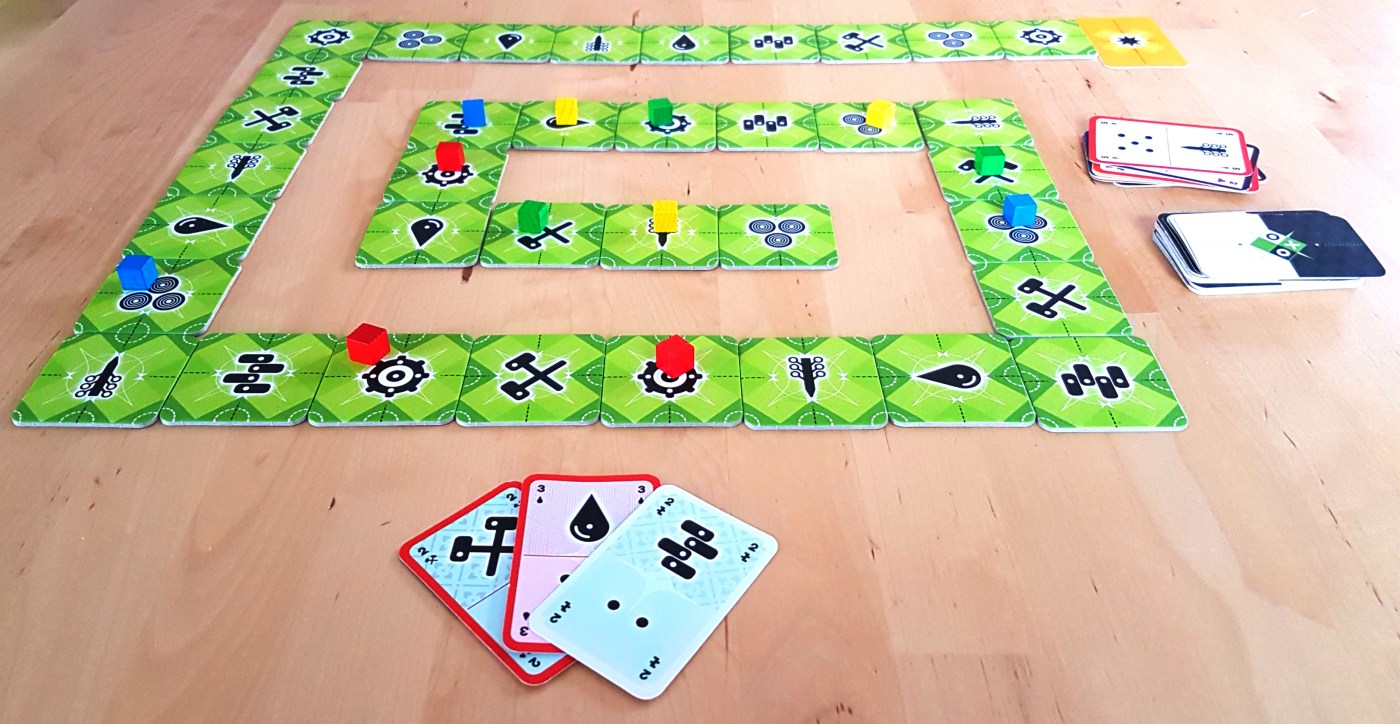
This game is heavily inspired by the great game Cartagena (2000), developed by Leo Colovini. We fully recommend getting a copy of the game for the full pirate experience, but you can also mimic some of the game mechanics using the Green Box.

One really cool thing about Cartagena is that although it’s labelled as an 8+ game that provides sophisticated strategic choices to all ages, you can easily reduce the rules and complexity to play with younger kids. All the way down to the most basic: Draw one card, find the right symbol on the board and move your piece forward to that symbol. This plays right into the flexibility of the Green Box as well, where we encourage players to come up with their own games and variations. Continue reading “Tunnel run – Game #7”
Skyline – Game #6

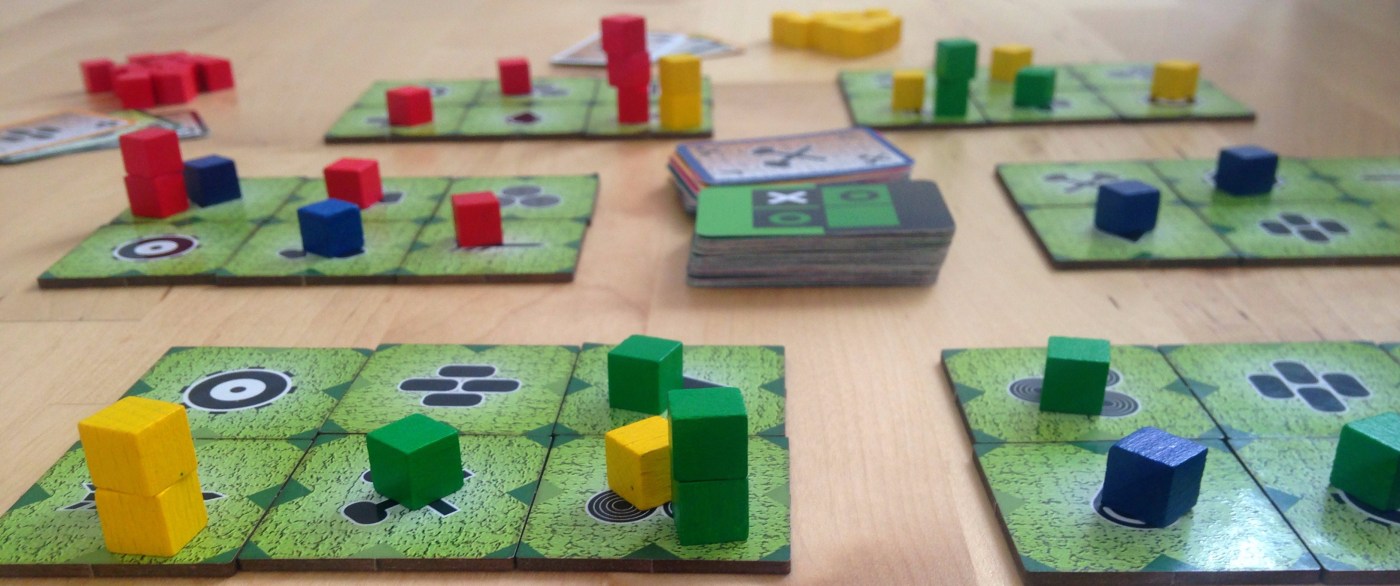
Andreas Seyfarths classic game Manhattan (1994) is a clean game concept combining the “area control” mechanic with the joy of building skyscrapers. While the skyline you can build with the Green Box is not half as impressive as the original, you can still recreate the basic experience, and maybe add a few twists of your own?

Continue reading “Skyline – Game #6”

Backgammon – Game #5

Backgammon is one of the oldest boardgames known, dating back more than 5000 years. It features simple rules, but often difficult choices. Its combination of luck, strategy and lots of interaction makes for a rich and rewarding game experience for players of all ages and skill levels. Continue reading “Backgammon – Game #5”

Tic-tac-toe – Game #4

Tic-tac-toe is a simple and ancient game that you can easily play with the Green Box. Perhaps more an exercise than a game, as experienced players know that you can not really play to win, only to draw.

Continue reading “Tic-tac-toe – Game #4”

The components

In order to make a set of components that can be use to play any number of different games, a few basic choices have been made:

  • First: There is no game board in the box. Instead, there are a number of square tiles that you can use to build many different game boards, or do something completely different with them.
  • Second: We have developed a system to the components in terms of symbols, colors and numbers, so that the different components reference each other in many different ways.

Continue reading “The components”

The progress plan

At the time of writing this post, in may 2016, we currently have produced one single rough prototype of the Green Box, and it’s not even in a box. The first draft of the components are ready, and we have used them to create and re-create a number of games. Continue reading “The progress plan”

The basic idea

The basic idea for the Green Box of Games was born from a fascination for the standard deck of playing cards. In a small pack of cardboard you get an entire game design system, which can be used to play almost an infinite number of different games. We wanted to make a “deck of board games” to mirror this concept.

Ludo – Game #3

The game of Ludo is probably familiar to most people. Based on the Indian game of Pachisi, it was patented and introduced in England in 1896. Playing Ludo with the Green Box makes the board smaller, but allows you to play with the rules.

Continue reading “Ludo – Game #3”

Halma – Game #2

Halma is a classic game invented in the 19th century, and the original game behind the variant Chinese Checkers. It has simple rules but provides plenty of interesting strategy, while including enough unpredictable interaction to make it fun for the whole family. Continue reading “Halma – Game #2”

Blog at WordPress.com.

Up ↑